Wound Not Healing? What Signs Mean You May Need Professional Wound Care?
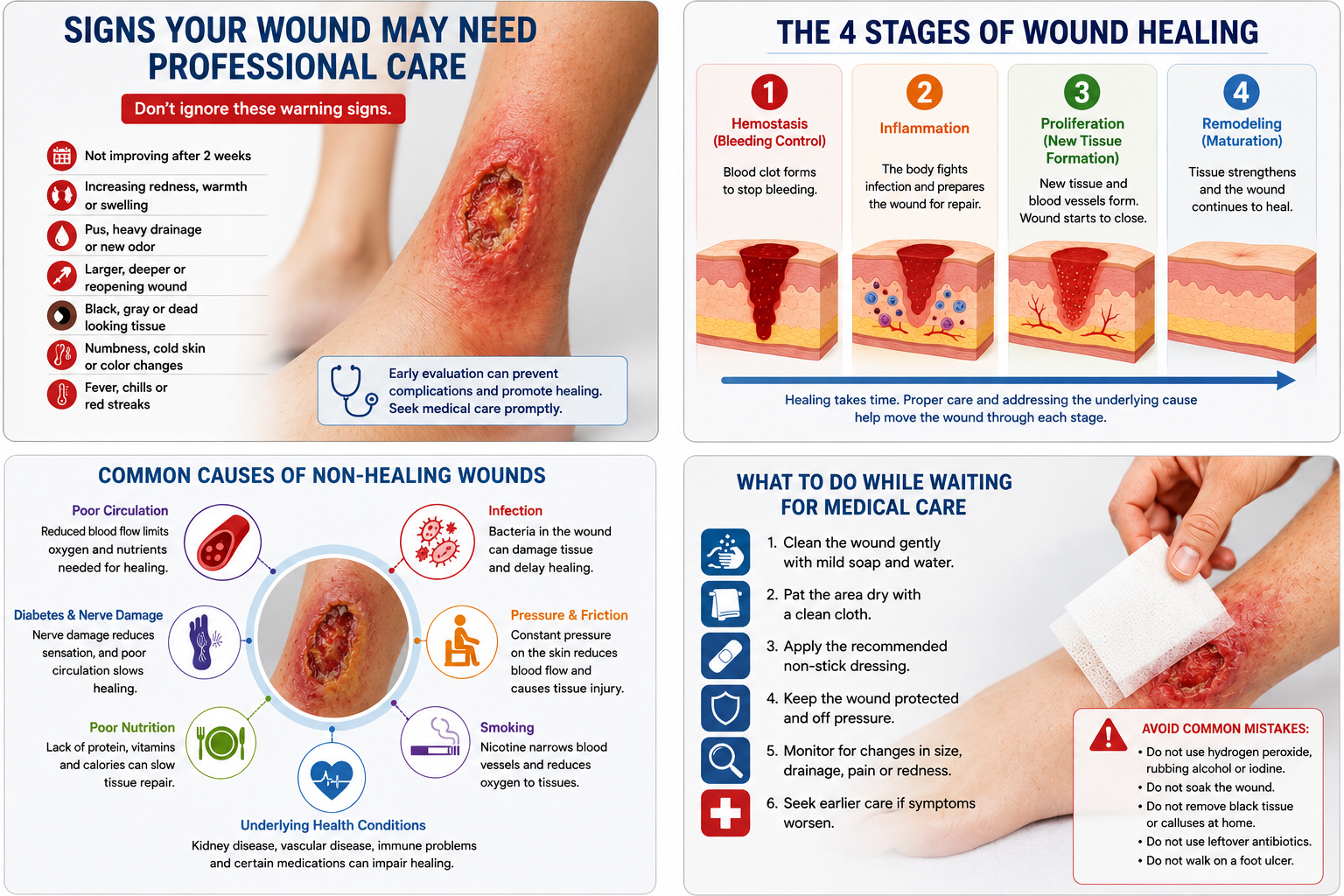
A wound that is not getting smaller, closing or developing healthier-looking tissue may need professional evaluation. Contact a healthcare provider promptly when healing has stalled or the wound is becoming more painful, swollen, deep, discolored or heavily draining.
Do not wait several weeks when there are signs of infection, poor circulation, tissue death, uncontrolled bleeding or a serious underlying condition. People with diabetes, reduced sensation, peripheral artery disease, immune suppression or a recent surgical procedure often need earlier assessment.
Professional wound care is not limited to changing a bandage. A wound specialist looks for the underlying problem preventing repair, such as infection, pressure, poor blood flow, swelling, nerve damage, dead tissue or inadequate nutrition.
Medical note: This article provides general education and cannot diagnose a wound. Seek individualized advice from a licensed healthcare professional.
When Is a Wound Considered Non-Healing?
A wound may be considered non-healing when it has not started to improve within about two weeks or has not healed completely within about six weeks. These are practical screening milestones rather than strict deadlines for every wound, according to MedlinePlus guidance on non-healing wounds.
Wound depth, location, cause and health status all affect healing time. A shallow scrape in a healthy adult may close quickly, while a surgical incision, deep pressure injury or ulcer caused by poor circulation may take much longer.
Seek care sooner when the wound:
- Becomes larger or deeper
- Develops increasing redness, warmth, swelling or pain
- Produces pus or substantially more drainage
- Contains black or dead-looking tissue
- Reopens after surgery
- Is located on a numb or poorly perfused foot
- Occurs in a person with diabetes, vascular disease or a weakened immune system
- Was caused by a bite, puncture, contaminated object, burn or crush injury
How Does a Normally Healing Wound Change Over Time?
A normally healing wound progresses through four overlapping phases: bleeding control, inflammation, new-tissue formation and remodeling. These stages are explained in the NCBI clinical overview of wound healing.
During successful healing, you would generally expect to see some combination of:
- Bleeding that stops
- Gradually decreasing swelling and tenderness
- New pink or red tissue in the wound bed
- Wound edges that begin moving inward
- A measurable reduction in wound size
- Less drainage over time
- Skin gradually forming over the wound
A new wound can be mildly tender or pink around the edges. The more concerning pattern is deterioration: spreading redness, increasing pain, worsening swelling, new pus, tissue discoloration, wound enlargement or a lack of measurable progress.
| Feature | More consistent with healing | More concerning |
|---|
| Size | Gradually becoming smaller | Unchanged, larger or deeper |
| Pain | Stable or improving | Increasing, persistent or severe |
| Surrounding skin | Mild early irritation that settles | Spreading redness, warmth or swelling |
| Drainage | Decreasing and manageable | Increasing, thick, cloudy, bloody or pus-like |
| Wound bed | Healthy pink or red tissue | Black, gray or dead-looking tissue |
| Edges | Moving together | Pulling apart, undermined or reopening |
| General health | No systemic symptoms | Fever, chills, confusion or shortness of breath |
What Signs Suggest That a Wound Needs Professional Care?
A wound needs professional assessment when it is not progressing, shows signs of infection or tissue damage, or occurs in someone at increased risk of complications.
Is the Wound Failing to Improve?
A wound that shows no visible or measurable improvement deserves clinical review. Lack of progress may indicate that pressure, infection, poor circulation or another underlying problem has not been corrected.
The MedlinePlus guide to wound care centers explains that wound specialists evaluate factors such as circulation, infection, nerve damage, pressure and underlying medical conditions.
Useful signs of progress include:
- Reduced length, width or depth
- Less drainage
- Healthier-looking tissue
- Less swelling
- Edges beginning to close
- Lower pain levels
Consider taking a dated photograph beside a disposable ruler, unless a clinician has advised against handling or exposing the wound. Use the same lighting and distance each time. Photographs cannot replace an examination, but they can help document change.
Are Redness, Swelling, Warmth or Pain Increasing?
Increasing redness, warmth, swelling or pain can indicate infection or worsening inflammation. Redness that spreads away from the wound, especially with red streaks, requires prompt medical advice.
MedlinePlus wound-care instructions advise contacting a healthcare provider when a wound becomes increasingly painful, develops pus, turns black around the edges or begins to reopen.
Contact a clinician when:
- Redness is expanding
- The skin feels progressively hotter
- Swelling is increasing
- Pain is new, severe or worsening
- The wound is tender beyond its visible edge
- Red lines extend away from the wound
- Movement becomes more painful or difficult
Severe pain that seems out of proportion to the wound’s appearance is especially concerning when it develops with rapidly spreading redness, swelling or fever.
Is the Wound Producing Pus, Heavy Drainage or a New Odor?
Pus, rapidly increasing drainage or thick cloudy fluid can indicate infection and should be assessed. A new odor may also signal excess bacteria or dead tissue, although odor alone cannot identify the cause.
Watch for:
- Yellow, green, gray or creamy drainage
- A sudden increase in fluid
- Dressings becoming saturated much faster than usual
- Blood or pus coming from the wound
- Drainage accompanied by worsening pain, warmth or redness
- A persistent new odor after gentle cleaning
Do not try to diagnose infection by drainage color alone. Dressing material, wound type and prescribed topical products can change the fluid’s appearance.
Is the Wound Becoming Larger, Deeper or Open Again?
A wound that is enlarging, deepening or reopening is not following the expected healing pattern. A surgical incision that separates or loses stitches or staples requires prompt contact with the surgical team.
Seek assessment when:
- The wound edges pull farther apart
- A previously closed area opens
- A shallow wound develops a crater
- A tunnel or pocket appears under the skin
- Fat, tendon, muscle or bone becomes visible
- The wound repeatedly breaks down after appearing to close
Do not pack, probe or explore a deep wound unless a healthcare professional has provided specific instructions.
Does the Wound Contain Black, Gray or Dead-Looking Tissue?
Black edges or dark, leathery tissue may represent dead or poorly perfused tissue and should be evaluated. Dead tissue can obstruct healing, conceal the wound’s true depth and create conditions in which infection can develop.
Professional debridement may be needed to remove nonviable tissue. Debridement can be performed with specialized instruments, dressings, enzymes or other clinical techniques. It should not be attempted with household scissors, tweezers or sharp tools.
Dark discoloration is particularly urgent when it occurs with:
- A cold or numb foot
- Weak or absent pulses
- Severe pain
- Rapid expansion
- Blisters
- Fever
- Foul drainage
- Diabetes or known vascular disease
Are Numbness, Cold Skin or Color Changes Present?
Numbness, a cold foot, unusual paleness, blue discoloration or marked temperature differences may indicate nerve damage or reduced circulation. A slow-healing leg or foot wound is one possible symptom of peripheral artery disease, according to the National Heart, Lung, and Blood Institute.
Other circulation-related warning signs include:
- Leg pain or cramping while walking
- Weak pulses in the foot
- Shiny skin or reduced hair growth
- Toes that appear pale, blue or dark
- A wound on the toes, heel or outer ankle that remains painful
- A foot that is noticeably colder than the other foot
Numbness does not make a wound less serious. Reduced sensation can hide pressure damage, burns, infection or deeper tissue injury.
Do Diabetes or Circulation Problems Increase the Urgency?
Yes. A foot blister, cut or ulcer in a person with diabetes should be reported early because diabetes can reduce blood flow, damage nerves and make infection harder to detect or control.
The CDC’s diabetic foot-health guidance recommends that people with diabetes check their feet every day and contact a healthcare provider about sores, blisters and other concerning changes.
People with diabetes should inspect their feet daily for:
- Cuts
- Blisters
- Redness
- Swelling
- Cracks
- Calluses
- Drainage
- Color or temperature changes
Do not walk barefoot or cut away a callus over a wound. A diabetes-related plantar foot ulcer often requires pressure relief, known as offloading, as part of a professionally supervised treatment plan.
The importance of offloading is emphasized in the International Working Group on the Diabetic Foot offloading guidelines.
When Is a Non-Healing Wound an Emergency?
A wound is an emergency when there is severe bleeding, major tissue damage, rapidly spreading infection or possible sepsis.
When Does Bleeding Require Emergency Care?
Call emergency services for severe bleeding, spurting blood or bleeding that does not stop after firm direct pressure. Major wounds involving the neck, chest, abdomen, groin or pelvis also require immediate care.
While help is being arranged:
- Apply firm, continuous pressure with clean gauze or cloth.
- Add more material on top if blood soaks through.
- Do not repeatedly lift the dressing to check the wound.
- Do not remove a deeply embedded object.
- Do not push exposed tissue back into the body.
Which Symptoms May Indicate Sepsis?
Sepsis is a life-threatening reaction to infection. Seek emergency care when a worsening wound infection is accompanied by confusion, shortness of breath, clammy skin, extreme pain, fever or chills, a rapid heartbeat or a weak pulse.
The CDC’s sepsis guidance describes sepsis as a medical emergency that requires rapid evaluation and treatment.
A wound does not have to look dramatic for the person to be seriously ill. Act on the overall condition, especially when an older adult, immunocompromised person or recently hospitalized patient becomes suddenly confused, weak or breathless.
Which Symptoms May Indicate a Rapidly Spreading Infection?
Rapidly spreading redness or swelling, fever and severe pain beyond the visibly affected area require immediate medical evaluation. These can occur with rare but dangerous deep soft-tissue infections.
The CDC’s information on necrotizing fasciitis advises immediate medical care for rapidly spreading skin changes, severe pain and signs of systemic illness.
Other emergency warning signs include:
- Skin turning purple, gray or black
- New blisters over a painful swollen area
- Dizziness or fainting
- Vomiting with rapidly worsening skin changes
- Extreme weakness
- Pain that escalates over hours
- A strong sense that the person is becoming seriously ill
Why Do Some Wounds Stop Healing?
Wounds commonly stop healing because the body cannot resolve infection, deliver enough oxygen, relieve repeated pressure or build healthy new tissue.
How Do Infection and Dead Tissue Delay Healing?
Infection prolongs inflammation and damages new tissue, while dead tissue can physically block repair. A foreign body, such as glass, wood or contaminated material, can also keep a wound inflamed.
Professional care may be needed to:
- Remove dead or contaminated tissue
- Look for a retained foreign object
- Collect a sample when clinically appropriate
- Evaluate for cellulitis or bone infection
- Choose an appropriate dressing
- Determine whether antimicrobial treatment is necessary
Not every open wound requires antibiotics. Antibiotic decisions should be based on clinical evidence of infection and the individual patient’s condition.
How Do Diabetes and Nerve Damage Affect Wounds?
Diabetes can impair immune function, circulation and tissue repair. Diabetic neuropathy can also reduce pain sensation, allowing repeated pressure or injury to continue unnoticed.
The CDC explains that diabetes-related nerve damage and reduced blood flow can make foot wounds harder to notice and more difficult to heal.
A person may keep walking on an ulcer because it does not hurt. The lack of pain may falsely suggest that the wound is minor even as deeper tissue damage develops.
How Does Poor Circulation Delay Healing?
Poor circulation limits the oxygen and nutrients available for tissue repair. Peripheral artery disease can therefore cause or prolong wounds on the feet and lower legs.
The National Heart, Lung, and Blood Institute reports that peripheral artery disease affects more than eight million people aged 40 or older in the United States.
This matters because a non-healing lower-extremity wound may be the visible sign of a larger blood-flow problem, not simply a skin injury.
A clinician may assess circulation by checking pulses, skin temperature and capillary refill, and may arrange noninvasive vascular testing.
How Do Pressure, Swelling and Immobility Affect Healing?
Repeated pressure restricts local blood flow and continually injures tissue. Immobility increases the risk of pressure injuries over the heels, hips, tailbone, ankles and other bony areas.
Chronic leg swelling can also interfere with healing. In venous disease, blood and fluid accumulate in the lower leg, contributing to inflammation, skin changes and ulcer formation.
Treatment must match the cause:
- Pressure-related wounds need pressure redistribution.
- Diabetic plantar ulcers often need offloading.
- Venous ulcers may need clinician-directed compression.
- Arterial wounds need vascular assessment.
- Immobile patients may need repositioning and support surfaces.
Using the wrong treatment for the wound’s cause can delay healing, which is why an accurate assessment matters.
Can Smoking, Nutrition or Medication Slow Healing?
Yes. Smoking, poor nutrition, heavy alcohol use, immune suppression and some medications can interfere with wound repair.
Adequate calories, protein and micronutrients are needed to form collagen, support immune function and build new tissue. A peer-reviewed review indexed by PubMed discusses the relationship between nutrition, wound healing and infection risk.
Nutritional supplements should not be started automatically. A clinician or registered dietitian can identify deficiencies and recommend appropriate intake.
Tell the wound-care team about:
- Corticosteroids
- Chemotherapy
- Immunosuppressive drugs
- Blood thinners
- Recent medication changes
- Reduced appetite or unintentional weight loss
- Smoking or nicotine use
- Problems controlling blood glucose
Do not stop prescribed medication without speaking with the prescriber.
Which Types of Wounds Commonly Need Specialist Care?
Specialist wound care is commonly used for wounds that are complex, recurrent, deep, infected or linked to an underlying medical condition.
| Wound type | Common underlying issue | Important clues |
| Diabetic foot ulcer | Neuropathy, pressure and impaired circulation | Foot sore, callus, numbness or minimal pain |
| Venous leg ulcer | Poor venous return and swelling | Lower-leg ulcer, edema and skin discoloration |
| Arterial ulcer | Reduced arterial blood flow | Painful toe or foot wound, cold skin or weak pulses |
| Pressure injury | Sustained pressure or shear | Wound over a heel, hip, tailbone or other bony area |
| Surgical wound | Infection, tension or wound separation | Increasing drainage, redness or reopening |
| Traumatic wound | Deep tissue injury or retained material | Puncture, bite, crush injury or contaminated wound |
| Radiation wound | Tissue damage following radiation treatment | Fragile or ulcerated skin in a treated area |
| Atypical wound | Inflammatory, autoimmune or malignant process | Unusual appearance, location or failure to respond |
Wound prevalence is substantial. A peer-reviewed Medicare claims analysis found that the number of beneficiaries receiving care for wounds increased from approximately 8.2 million in 2014 to 10.5 million in 2019.
The figures apply specifically to Medicare beneficiaries rather than the entire population, but they illustrate the significant healthcare burden associated with wounds.
What Happens at a Professional Wound Care Appointment?
A wound-care appointment focuses on identifying why the wound is not healing and building a treatment plan around that cause.
How Is the Cause of the Wound Identified?
The clinician will usually examine and measure the wound, inspect the surrounding skin and assess circulation, pressure, sensation, swelling and infection risk.
The evaluation may include:
- Wound length, width and depth
- Tissue visible in the wound bed
- Drainage amount and type
- Condition of the wound edges
- Pain and sensation
- Foot or leg pulses
- Swelling and skin temperature
- Medical history and medication review
- Blood-glucose history
- Vascular testing
- Imaging when bone infection or a foreign body is suspected
- Laboratory tests when clinically indicated
The clinician may also ask how the wound began, how it has changed and which treatments have already been used.
Which Wound Treatments May Be Recommended?
Treatment depends on the wound’s cause, depth, location and infection status. No single dressing or procedure is appropriate for every non-healing wound.
Possible treatments include:
- Wound cleansing: Removing debris while protecting viable tissue
- Debridement: Removing dead or contaminated tissue
- Moisture-balancing dressings: Managing drainage while maintaining a healing environment
- Offloading: Reducing pressure on a diabetic or neuropathic foot ulcer
- Pressure redistribution: Repositioning or using specialized cushions, mattresses or heel protectors
- Compression: Managing selected venous wounds and leg swelling after appropriate assessment
- Infection treatment: Using systemic or topical therapy when clinically indicated
- Negative-pressure wound therapy: Applying controlled suction through a sealed dressing
- Skin substitutes or grafts: Covering selected wounds that need advanced closure support
- Hyperbaric oxygen therapy: Increasing oxygen delivery for specific qualifying wounds
- Vascular treatment: Improving blood flow when arterial disease is limiting healing
- Diabetes and nutrition support: Addressing systemic barriers to repair
Advanced treatment does not replace basic care. Pressure relief, blood-flow assessment, infection control, appropriate moisture balance and management of underlying disease remain central.
What Should You Do While Waiting for Medical Care?
Keep the wound clean, protected and free from avoidable pressure while following any existing instructions from your clinician.
For a minor open wound:
- Wash your hands.
- Gently clean the area with mild soap and running water, unless you have different medical instructions.
- Pat the surrounding skin dry.
- Apply the recommended non-stick dressing.
- Change the dressing when instructed or when it becomes wet, dirty or loose.
- Monitor size, drainage, pain, redness and swelling.
- Seek earlier care if the condition worsens.
A deep, heavily contaminated, surgical, diabetic, arterial or previously treated wound may require different care. Follow the instructions given by the treating clinician.
Which Common Wound-Care Mistakes Should You Avoid?
Avoid actions that damage new tissue, hide deterioration or delay appropriate treatment.
Common mistakes include:
- Waiting for several weeks despite worsening symptoms
- Repeatedly applying hydrogen peroxide, rubbing alcohol or iodine to an open wound
- Cutting away black tissue or calluses at home
- Soaking the wound without medical direction
- Walking on a diabetic foot ulcer
- Using leftover antibiotics
- Taking antibiotics prescribed for another person
- Applying tight wraps before circulation has been evaluated
- Packing a deep wound without instructions
- Using household glue or powders
- Repeatedly touching the wound with unwashed hands
- Assuming that a painless wound is harmless
The American College of Surgeons’ wound home-care guidance advises against cleaning open wounds with hydrogen peroxide, rubbing alcohol or iodine because these substances may damage healing tissue.
Review tetanus protection after puncture wounds, bites, contaminated wounds, crush injuries, burns or wounds containing dead tissue. The CDC’s tetanus wound-management guidance explains that vaccine and tetanus immune globulin recommendations depend on the wound type and vaccination history.
What Information Should You Take to the Appointment?
Bring enough information to help the clinician see the wound’s full history.
Useful items include:
- The date and cause of the wound
- Dated photographs showing progression
- Previous measurements
- A list of dressings and products used
- Current medications and allergies
- Recent antibiotic use
- Diabetes and blood-glucose information
- Vascular, kidney, immune or neurological conditions
- Surgical reports or discharge instructions
- Any fever, chills, odor, bleeding or drainage changes
- Tetanus vaccination history
- Changes in mobility, footwear, appetite or weight
What Is the Key Takeaway?
A wound that is not improving, is worsening or is linked to diabetes, poor circulation, infection, pressure or dead tissue should be assessed professionally.
The most important warning signs are:
- No meaningful improvement
- Increasing pain, redness, warmth or swelling
- Pus or rapidly increasing drainage
- A larger, deeper or reopened wound
- Black or dead-looking tissue
- Numbness, cold skin or color changes
- Fever, chills or red streaks
- Exposed tendon, muscle or bone
Call emergency services for uncontrolled bleeding, major injury or possible sepsis. Early assessment can identify the cause, prevent further tissue loss and connect the patient with the right treatment.
Frequently Asked Questions
Can a Wound Be Infected Without a Fever?
Yes. A wound can have a local infection without causing fever. Increasing redness, warmth, swelling, pain, pus or drainage still requires medical attention.
Does Yellow Drainage Always Mean Infection?
No. Drainage appearance varies by wound and dressing, but thick, cloudy or increasing yellow or green fluid—especially with pain, redness, warmth or odor—should be assessed.
Should a Non-Healing Wound Be Left Open to the Air?
Usually not. Many wounds heal better in a protected, appropriately moist environment. The correct dressing depends on the wound type and drainage level.
Can Hydrogen Peroxide Help a Wound Heal?
Routine hydrogen peroxide use is generally discouraged for open wounds because it can damage healing tissue. The American College of Surgeons recommends gently cleaning minor wounds with soap and water unless a clinician provides different instructions.
Does Every Non-Healing Wound Need Antibiotics?
No. Antibiotics are used when a clinician identifies a bacterial infection that requires them. Poor circulation, pressure or dead tissue will not be corrected by antibiotics alone.
When Should a Person With Diabetes Report a Foot Wound?
A person with diabetes should report a new blister, cut, sore or ulcer promptly, especially when it is red, swollen, draining, numb, discolored or not improving. Review the CDC’s guidance on diabetes and foot health for additional preventive steps.
Can Poor Circulation Prevent a Wound From Healing?
Yes. Reduced arterial blood flow limits oxygen and nutrient delivery. A slow-healing foot or lower-leg wound may require vascular evaluation as well as local wound care.
Conclusion
A non-healing wound is often a sign of an unresolved problem beneath the surface. Professional wound care can identify whether infection, circulation, pressure, nerve damage or another condition is blocking repair—and provide treatment before the wound becomes more difficult to manage.
Wound Not Healing? What Signs Mean You May Need Professional Wound Care?
A wound that is not getting smaller, closing or developing healthier-looking tissue may need professional evaluation. Contact a healthcare provider promptly when healing has stalled or the wound is becoming more painful, swollen, deep, discolored or heavily draining.
Do not wait several weeks when there are signs of infection, poor circulation, tissue death, uncontrolled bleeding or a serious underlying condition. People with diabetes, reduced sensation, peripheral artery disease, immune suppression or a recent surgical procedure often need earlier assessment.
Professional wound care is not limited to changing a bandage. A wound specialist looks for the underlying problem preventing repair, such as infection, pressure, poor blood flow, swelling, nerve damage, dead tissue or inadequate nutrition.
Medical note: This article provides general education and cannot diagnose a wound. Seek individualized advice from a licensed healthcare professional.
When Is a Wound Considered Non-Healing?
A wound may be considered non-healing when it has not started to improve within about two weeks or has not healed completely within about six weeks. These are practical screening milestones rather than strict deadlines for every wound, according to MedlinePlus guidance on non-healing wounds.
Wound depth, location, cause and health status all affect healing time. A shallow scrape in a healthy adult may close quickly, while a surgical incision, deep pressure injury or ulcer caused by poor circulation may take much longer.
Seek care sooner when the wound:
- Becomes larger or deeper
- Develops increasing redness, warmth, swelling or pain
- Produces pus or substantially more drainage
- Contains black or dead-looking tissue
- Reopens after surgery
- Is located on a numb or poorly perfused foot
- Occurs in a person with diabetes, vascular disease or a weakened immune system
- Was caused by a bite, puncture, contaminated object, burn or crush injury
How Does a Normally Healing Wound Change Over Time?
A normally healing wound progresses through four overlapping phases: bleeding control, inflammation, new-tissue formation and remodeling. These stages are explained in the NCBI clinical overview of wound healing.
During successful healing, you would generally expect to see some combination of:
- Bleeding that stops
- Gradually decreasing swelling and tenderness
- New pink or red tissue in the wound bed
- Wound edges that begin moving inward
- A measurable reduction in wound size
- Less drainage over time
- Skin gradually forming over the wound
A new wound can be mildly tender or pink around the edges. The more concerning pattern is deterioration: spreading redness, increasing pain, worsening swelling, new pus, tissue discoloration, wound enlargement or a lack of measurable progress.
| Feature | More consistent with healing | More concerning |
|---|
| Size | Gradually becoming smaller | Unchanged, larger or deeper |
| Pain | Stable or improving | Increasing, persistent or severe |
| Surrounding skin | Mild early irritation that settles | Spreading redness, warmth or swelling |
| Drainage | Decreasing and manageable | Increasing, thick, cloudy, bloody or pus-like |
| Wound bed | Healthy pink or red tissue | Black, gray or dead-looking tissue |
| Edges | Moving together | Pulling apart, undermined or reopening |
| General health | No systemic symptoms | Fever, chills, confusion or shortness of breath |
What Signs Suggest That a Wound Needs Professional Care?
A wound needs professional assessment when it is not progressing, shows signs of infection or tissue damage, or occurs in someone at increased risk of complications.
Is the Wound Failing to Improve?
A wound that shows no visible or measurable improvement deserves clinical review. Lack of progress may indicate that pressure, infection, poor circulation or another underlying problem has not been corrected.
The MedlinePlus guide to wound care centers explains that wound specialists evaluate factors such as circulation, infection, nerve damage, pressure and underlying medical conditions.
Useful signs of progress include:
- Reduced length, width or depth
- Less drainage
- Healthier-looking tissue
- Less swelling
- Edges beginning to close
- Lower pain levels
Consider taking a dated photograph beside a disposable ruler, unless a clinician has advised against handling or exposing the wound. Use the same lighting and distance each time. Photographs cannot replace an examination, but they can help document change.
Are Redness, Swelling, Warmth or Pain Increasing?
Increasing redness, warmth, swelling or pain can indicate infection or worsening inflammation. Redness that spreads away from the wound, especially with red streaks, requires prompt medical advice.
MedlinePlus wound-care instructions advise contacting a healthcare provider when a wound becomes increasingly painful, develops pus, turns black around the edges or begins to reopen.
Contact a clinician when:
- Redness is expanding
- The skin feels progressively hotter
- Swelling is increasing
- Pain is new, severe or worsening
- The wound is tender beyond its visible edge
- Red lines extend away from the wound
- Movement becomes more painful or difficult
Severe pain that seems out of proportion to the wound’s appearance is especially concerning when it develops with rapidly spreading redness, swelling or fever.
Is the Wound Producing Pus, Heavy Drainage or a New Odor?
Pus, rapidly increasing drainage or thick cloudy fluid can indicate infection and should be assessed. A new odor may also signal excess bacteria or dead tissue, although odor alone cannot identify the cause.
Watch for:
- Yellow, green, gray or creamy drainage
- A sudden increase in fluid
- Dressings becoming saturated much faster than usual
- Blood or pus coming from the wound
- Drainage accompanied by worsening pain, warmth or redness
- A persistent new odor after gentle cleaning
Do not try to diagnose infection by drainage color alone. Dressing material, wound type and prescribed topical products can change the fluid’s appearance.
Is the Wound Becoming Larger, Deeper or Open Again?
A wound that is enlarging, deepening or reopening is not following the expected healing pattern. A surgical incision that separates or loses stitches or staples requires prompt contact with the surgical team.
Seek assessment when:
- The wound edges pull farther apart
- A previously closed area opens
- A shallow wound develops a crater
- A tunnel or pocket appears under the skin
- Fat, tendon, muscle or bone becomes visible
- The wound repeatedly breaks down after appearing to close
Do not pack, probe or explore a deep wound unless a healthcare professional has provided specific instructions.
Does the Wound Contain Black, Gray or Dead-Looking Tissue?
Black edges or dark, leathery tissue may represent dead or poorly perfused tissue and should be evaluated. Dead tissue can obstruct healing, conceal the wound’s true depth and create conditions in which infection can develop.
Professional debridement may be needed to remove nonviable tissue. Debridement can be performed with specialized instruments, dressings, enzymes or other clinical techniques. It should not be attempted with household scissors, tweezers or sharp tools.
Dark discoloration is particularly urgent when it occurs with:
- A cold or numb foot
- Weak or absent pulses
- Severe pain
- Rapid expansion
- Blisters
- Fever
- Foul drainage
- Diabetes or known vascular disease
Are Numbness, Cold Skin or Color Changes Present?
Numbness, a cold foot, unusual paleness, blue discoloration or marked temperature differences may indicate nerve damage or reduced circulation. A slow-healing leg or foot wound is one possible symptom of peripheral artery disease, according to the National Heart, Lung, and Blood Institute.
Other circulation-related warning signs include:
- Leg pain or cramping while walking
- Weak pulses in the foot
- Shiny skin or reduced hair growth
- Toes that appear pale, blue or dark
- A wound on the toes, heel or outer ankle that remains painful
- A foot that is noticeably colder than the other foot
Numbness does not make a wound less serious. Reduced sensation can hide pressure damage, burns, infection or deeper tissue injury.
Do Diabetes or Circulation Problems Increase the Urgency?
Yes. A foot blister, cut or ulcer in a person with diabetes should be reported early because diabetes can reduce blood flow, damage nerves and make infection harder to detect or control.
The CDC’s diabetic foot-health guidance recommends that people with diabetes check their feet every day and contact a healthcare provider about sores, blisters and other concerning changes.
People with diabetes should inspect their feet daily for:
- Cuts
- Blisters
- Redness
- Swelling
- Cracks
- Calluses
- Drainage
- Color or temperature changes
Do not walk barefoot or cut away a callus over a wound. A diabetes-related plantar foot ulcer often requires pressure relief, known as offloading, as part of a professionally supervised treatment plan.
The importance of offloading is emphasized in the International Working Group on the Diabetic Foot offloading guidelines.
When Is a Non-Healing Wound an Emergency?
A wound is an emergency when there is severe bleeding, major tissue damage, rapidly spreading infection or possible sepsis.
When Does Bleeding Require Emergency Care?
Call emergency services for severe bleeding, spurting blood or bleeding that does not stop after firm direct pressure. Major wounds involving the neck, chest, abdomen, groin or pelvis also require immediate care.
While help is being arranged:
- Apply firm, continuous pressure with clean gauze or cloth.
- Add more material on top if blood soaks through.
- Do not repeatedly lift the dressing to check the wound.
- Do not remove a deeply embedded object.
- Do not push exposed tissue back into the body.
Which Symptoms May Indicate Sepsis?
Sepsis is a life-threatening reaction to infection. Seek emergency care when a worsening wound infection is accompanied by confusion, shortness of breath, clammy skin, extreme pain, fever or chills, a rapid heartbeat or a weak pulse.
The CDC’s sepsis guidance describes sepsis as a medical emergency that requires rapid evaluation and treatment.
A wound does not have to look dramatic for the person to be seriously ill. Act on the overall condition, especially when an older adult, immunocompromised person or recently hospitalized patient becomes suddenly confused, weak or breathless.
Which Symptoms May Indicate a Rapidly Spreading Infection?
Rapidly spreading redness or swelling, fever and severe pain beyond the visibly affected area require immediate medical evaluation. These can occur with rare but dangerous deep soft-tissue infections.
The CDC’s information on necrotizing fasciitis advises immediate medical care for rapidly spreading skin changes, severe pain and signs of systemic illness.
Other emergency warning signs include:
- Skin turning purple, gray or black
- New blisters over a painful swollen area
- Dizziness or fainting
- Vomiting with rapidly worsening skin changes
- Extreme weakness
- Pain that escalates over hours
- A strong sense that the person is becoming seriously ill
Why Do Some Wounds Stop Healing?
Wounds commonly stop healing because the body cannot resolve infection, deliver enough oxygen, relieve repeated pressure or build healthy new tissue.
How Do Infection and Dead Tissue Delay Healing?
Infection prolongs inflammation and damages new tissue, while dead tissue can physically block repair. A foreign body, such as glass, wood or contaminated material, can also keep a wound inflamed.
Professional care may be needed to:
- Remove dead or contaminated tissue
- Look for a retained foreign object
- Collect a sample when clinically appropriate
- Evaluate for cellulitis or bone infection
- Choose an appropriate dressing
- Determine whether antimicrobial treatment is necessary
Not every open wound requires antibiotics. Antibiotic decisions should be based on clinical evidence of infection and the individual patient’s condition.
How Do Diabetes and Nerve Damage Affect Wounds?
Diabetes can impair immune function, circulation and tissue repair. Diabetic neuropathy can also reduce pain sensation, allowing repeated pressure or injury to continue unnoticed.
The CDC explains that diabetes-related nerve damage and reduced blood flow can make foot wounds harder to notice and more difficult to heal.
A person may keep walking on an ulcer because it does not hurt. The lack of pain may falsely suggest that the wound is minor even as deeper tissue damage develops.
How Does Poor Circulation Delay Healing?
Poor circulation limits the oxygen and nutrients available for tissue repair. Peripheral artery disease can therefore cause or prolong wounds on the feet and lower legs.
The National Heart, Lung, and Blood Institute reports that peripheral artery disease affects more than eight million people aged 40 or older in the United States.
This matters because a non-healing lower-extremity wound may be the visible sign of a larger blood-flow problem, not simply a skin injury.
A clinician may assess circulation by checking pulses, skin temperature and capillary refill, and may arrange noninvasive vascular testing.
How Do Pressure, Swelling and Immobility Affect Healing?
Repeated pressure restricts local blood flow and continually injures tissue. Immobility increases the risk of pressure injuries over the heels, hips, tailbone, ankles and other bony areas.
Chronic leg swelling can also interfere with healing. In venous disease, blood and fluid accumulate in the lower leg, contributing to inflammation, skin changes and ulcer formation.
Treatment must match the cause:
- Pressure-related wounds need pressure redistribution.
- Diabetic plantar ulcers often need offloading.
- Venous ulcers may need clinician-directed compression.
- Arterial wounds need vascular assessment.
- Immobile patients may need repositioning and support surfaces.
Using the wrong treatment for the wound’s cause can delay healing, which is why an accurate assessment matters.
Can Smoking, Nutrition or Medication Slow Healing?
Yes. Smoking, poor nutrition, heavy alcohol use, immune suppression and some medications can interfere with wound repair.
Adequate calories, protein and micronutrients are needed to form collagen, support immune function and build new tissue. A peer-reviewed review indexed by PubMed discusses the relationship between nutrition, wound healing and infection risk.
Nutritional supplements should not be started automatically. A clinician or registered dietitian can identify deficiencies and recommend appropriate intake.
Tell the wound-care team about:
- Corticosteroids
- Chemotherapy
- Immunosuppressive drugs
- Blood thinners
- Recent medication changes
- Reduced appetite or unintentional weight loss
- Smoking or nicotine use
- Problems controlling blood glucose
Do not stop prescribed medication without speaking with the prescriber.
Which Types of Wounds Commonly Need Specialist Care?
Specialist wound care is commonly used for wounds that are complex, recurrent, deep, infected or linked to an underlying medical condition.
| Wound type | Common underlying issue | Important clues |
| Diabetic foot ulcer | Neuropathy, pressure and impaired circulation | Foot sore, callus, numbness or minimal pain |
| Venous leg ulcer | Poor venous return and swelling | Lower-leg ulcer, edema and skin discoloration |
| Arterial ulcer | Reduced arterial blood flow | Painful toe or foot wound, cold skin or weak pulses |
| Pressure injury | Sustained pressure or shear | Wound over a heel, hip, tailbone or other bony area |
| Surgical wound | Infection, tension or wound separation | Increasing drainage, redness or reopening |
| Traumatic wound | Deep tissue injury or retained material | Puncture, bite, crush injury or contaminated wound |
| Radiation wound | Tissue damage following radiation treatment | Fragile or ulcerated skin in a treated area |
| Atypical wound | Inflammatory, autoimmune or malignant process | Unusual appearance, location or failure to respond |
Wound prevalence is substantial. A peer-reviewed Medicare claims analysis found that the number of beneficiaries receiving care for wounds increased from approximately 8.2 million in 2014 to 10.5 million in 2019.
The figures apply specifically to Medicare beneficiaries rather than the entire population, but they illustrate the significant healthcare burden associated with wounds.
What Happens at a Professional Wound Care Appointment?
A wound-care appointment focuses on identifying why the wound is not healing and building a treatment plan around that cause.
How Is the Cause of the Wound Identified?
The clinician will usually examine and measure the wound, inspect the surrounding skin and assess circulation, pressure, sensation, swelling and infection risk.
The evaluation may include:
- Wound length, width and depth
- Tissue visible in the wound bed
- Drainage amount and type
- Condition of the wound edges
- Pain and sensation
- Foot or leg pulses
- Swelling and skin temperature
- Medical history and medication review
- Blood-glucose history
- Vascular testing
- Imaging when bone infection or a foreign body is suspected
- Laboratory tests when clinically indicated
The clinician may also ask how the wound began, how it has changed and which treatments have already been used.
Which Wound Treatments May Be Recommended?
Treatment depends on the wound’s cause, depth, location and infection status. No single dressing or procedure is appropriate for every non-healing wound.
Possible treatments include:
- Wound cleansing: Removing debris while protecting viable tissue
- Debridement: Removing dead or contaminated tissue
- Moisture-balancing dressings: Managing drainage while maintaining a healing environment
- Offloading: Reducing pressure on a diabetic or neuropathic foot ulcer
- Pressure redistribution: Repositioning or using specialized cushions, mattresses or heel protectors
- Compression: Managing selected venous wounds and leg swelling after appropriate assessment
- Infection treatment: Using systemic or topical therapy when clinically indicated
- Negative-pressure wound therapy: Applying controlled suction through a sealed dressing
- Skin substitutes or grafts: Covering selected wounds that need advanced closure support
- Hyperbaric oxygen therapy: Increasing oxygen delivery for specific qualifying wounds
- Vascular treatment: Improving blood flow when arterial disease is limiting healing
- Diabetes and nutrition support: Addressing systemic barriers to repair
Advanced treatment does not replace basic care. Pressure relief, blood-flow assessment, infection control, appropriate moisture balance and management of underlying disease remain central.
What Should You Do While Waiting for Medical Care?
Keep the wound clean, protected and free from avoidable pressure while following any existing instructions from your clinician.
For a minor open wound:
- Wash your hands.
- Gently clean the area with mild soap and running water, unless you have different medical instructions.
- Pat the surrounding skin dry.
- Apply the recommended non-stick dressing.
- Change the dressing when instructed or when it becomes wet, dirty or loose.
- Monitor size, drainage, pain, redness and swelling.
- Seek earlier care if the condition worsens.
A deep, heavily contaminated, surgical, diabetic, arterial or previously treated wound may require different care. Follow the instructions given by the treating clinician.
Which Common Wound-Care Mistakes Should You Avoid?
Avoid actions that damage new tissue, hide deterioration or delay appropriate treatment.
Common mistakes include:
- Waiting for several weeks despite worsening symptoms
- Repeatedly applying hydrogen peroxide, rubbing alcohol or iodine to an open wound
- Cutting away black tissue or calluses at home
- Soaking the wound without medical direction
- Walking on a diabetic foot ulcer
- Using leftover antibiotics
- Taking antibiotics prescribed for another person
- Applying tight wraps before circulation has been evaluated
- Packing a deep wound without instructions
- Using household glue or powders
- Repeatedly touching the wound with unwashed hands
- Assuming that a painless wound is harmless
The American College of Surgeons’ wound home-care guidance advises against cleaning open wounds with hydrogen peroxide, rubbing alcohol or iodine because these substances may damage healing tissue.
Review tetanus protection after puncture wounds, bites, contaminated wounds, crush injuries, burns or wounds containing dead tissue. The CDC’s tetanus wound-management guidance explains that vaccine and tetanus immune globulin recommendations depend on the wound type and vaccination history.
What Information Should You Take to the Appointment?
Bring enough information to help the clinician see the wound’s full history.
Useful items include:
- The date and cause of the wound
- Dated photographs showing progression
- Previous measurements
- A list of dressings and products used
- Current medications and allergies
- Recent antibiotic use
- Diabetes and blood-glucose information
- Vascular, kidney, immune or neurological conditions
- Surgical reports or discharge instructions
- Any fever, chills, odor, bleeding or drainage changes
- Tetanus vaccination history
- Changes in mobility, footwear, appetite or weight
What Is the Key Takeaway?
A wound that is not improving, is worsening or is linked to diabetes, poor circulation, infection, pressure or dead tissue should be assessed professionally.
The most important warning signs are:
- No meaningful improvement
- Increasing pain, redness, warmth or swelling
- Pus or rapidly increasing drainage
- A larger, deeper or reopened wound
- Black or dead-looking tissue
- Numbness, cold skin or color changes
- Fever, chills or red streaks
- Exposed tendon, muscle or bone
Call emergency services for uncontrolled bleeding, major injury or possible sepsis. Early assessment can identify the cause, prevent further tissue loss and connect the patient with the right treatment.
Frequently Asked Questions
Can a Wound Be Infected Without a Fever?
Yes. A wound can have a local infection without causing fever. Increasing redness, warmth, swelling, pain, pus or drainage still requires medical attention.
Does Yellow Drainage Always Mean Infection?
No. Drainage appearance varies by wound and dressing, but thick, cloudy or increasing yellow or green fluid—especially with pain, redness, warmth or odor—should be assessed.
Should a Non-Healing Wound Be Left Open to the Air?
Usually not. Many wounds heal better in a protected, appropriately moist environment. The correct dressing depends on the wound type and drainage level.
Can Hydrogen Peroxide Help a Wound Heal?
Routine hydrogen peroxide use is generally discouraged for open wounds because it can damage healing tissue. The American College of Surgeons recommends gently cleaning minor wounds with soap and water unless a clinician provides different instructions.
Does Every Non-Healing Wound Need Antibiotics?
No. Antibiotics are used when a clinician identifies a bacterial infection that requires them. Poor circulation, pressure or dead tissue will not be corrected by antibiotics alone.
When Should a Person With Diabetes Report a Foot Wound?
A person with diabetes should report a new blister, cut, sore or ulcer promptly, especially when it is red, swollen, draining, numb, discolored or not improving. Review the CDC’s guidance on diabetes and foot health for additional preventive steps.
Can Poor Circulation Prevent a Wound From Healing?
Yes. Reduced arterial blood flow limits oxygen and nutrient delivery. A slow-healing foot or lower-leg wound may require vascular evaluation as well as local wound care.
Conclusion
A non-healing wound is often a sign of an unresolved problem beneath the surface. Professional wound care can identify whether infection, circulation, pressure, nerve damage or another condition is blocking repair—and provide treatment before the wound becomes more difficult to manage.